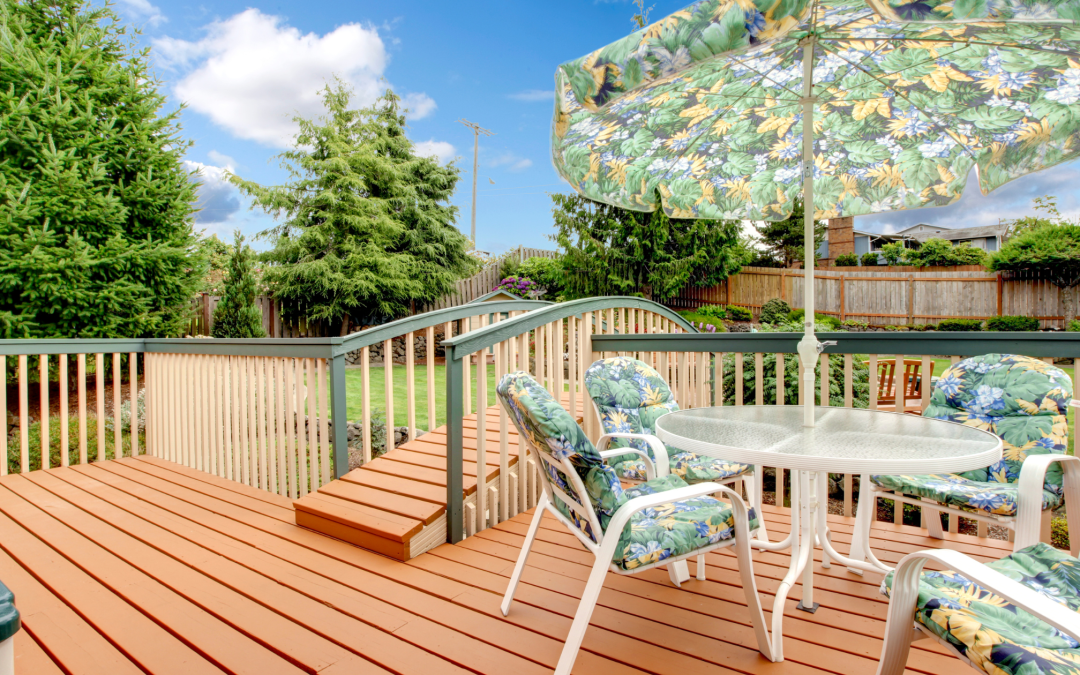
You walk out your back door, and there it is: a patch of grass, maybe a couple of lawn chairs, and not much else going on. It works. It’s just not the thing that pulls you outside on a Saturday evening. And when it’s time to sell, an empty yard rarely makes a buyer stop and picture their life in the house.
A deck changes that. It’s one of the few home improvements that pays you back twice, once in the years you use it and again when you sell. Here’s how that works, what kind of return to expect, and what decides whether your deck adds real value or just sits there.
A deck is the square footage buyers actually want
Here’s the thing about a deck: it adds living space without the price tag of a full room addition. You’re not pouring a new foundation or extending the roofline. You’re creating a place to eat dinner, host friends, and use the backyard rather than just look at it. Buyers respond to that.
Outdoor living has sat near the top of homebuyer wish lists for years, and the interest didn’t fade once everyone stopped being stuck at home. People want somewhere to unwind that isn’t a cramped slab pressed up against the house. When a buyer tours a home with a well-built deck, they aren’t running the construction math in their head. They’re picturing a summer cookout.
The numbers: what a deck returns at resale
Let’s talk return, because this is where decks really earn their reputation. They consistently land among the top exterior projects for resale value, and the data holds up. National remodeling reports put the return on a deck addition at roughly 80% of its cost recovered at sale, and in regions where people use their decks most of the year, that figure climbs even higher.
Compare that to a major kitchen remodel, which recoups closer to 50% of its cost at resale (and an upscale one, closer to 36%), and the deck starts to look like a smart move. The reason is cost: a deck is far cheaper to build than most big interior projects, so the slice you get back tends to land higher.
Two things push your return up. The first is sizing the deck to the home, which we’ll get to in a minute. The second is location: if people in your area can spend eight or nine months a year outside, buyers place more value on a deck. Even in a true four-season climate, a deck reads as a feature rather than a maintenance headache, as long as it’s built right.
Wood or composite? The choice changes your return.
This is the decision most homeowners get stuck on, so let’s keep it simple.
Pressure-treated wood costs less up front. Because the build is cheaper, it often shows a higher percentage return. The catch is upkeep. Wood wants staining and sealing every couple of years, and a neglected deck works against you. A gray, splintering board surface can actually knock money off your asking price.
Composite costs more to install, but it asks almost nothing of you afterward. No staining, no sealing, no splinters underfoot. It shrugs off fading and weather and keeps its look for decades. Plenty of buyers know this and will pay more for a deck they won’t have to babysit. The percentage return runs a touch lower than wood, but composite usually adds more total dollars to the sale and lasts two to three times as long.
So which one? If you’re selling soon and want the leanest path to ROI, wood can make sense. If you plan to stay a while and want the deck looking sharp the day you list, with zero weekend maintenance in between, composite usually earns its premium. Crown Installs builds both and can walk you through which one fits your home and your timeline.
Design decisions that move the value needle
A deck adds the most value when it looks like it was always meant to be there. That sounds obvious, and it’s exactly where a lot of DIY decks fall apart.
Size matters in both directions. Too small, and the deck looks like an afterthought bolted to the back wall. Too big, and it swallows the yard and overwhelms a modest home. A solid guideline is to keep it around 10% to 15% of your home’s square footage, scaled to how you’ll actually use it.
Then there are the details that make a deck feel finished:
- Railings set the tone. Clean horizontal lines suit a modern home, while turned balusters fit a traditional one. Glass or cable panels open up a view and read as premium.
- Levels add interest. A multi-level deck carves out separate zones, somewhere to dine and somewhere to lounge, without feeling like one flat platform.
- Built-ins earn their keep. Bench seating, planters, and low-voltage lighting turn a plain deck into a space people actually linger in after dark.
You don’t need all of it. You need the pieces that match how you live and how your home sits on the lot. Crown Installs designs around that instead of dropping a generic rectangle out back and calling it a day.
The value you get long before you sell
Resale ROI makes the headline, but it undersells what a deck does. Most of the payoff shows up while you still own the place.
A deck hands you usable square footage at a fraction of what an interior addition would cost. It’s where the grill lives, where the kids end up on summer nights, where the backyard stops being scenery and starts being part of the house. That daily use is a value the ROI percentage never captures.
A well-built deck with proper drainage also keeps foot traffic and standing water off the parts of your home that don’t handle either well. When the same team that handles your siding and roofing builds the deck, too, those systems are planned together rather than working against each other. Crown Installs treats the deck as part of the whole exterior, not a bolt-on.
Why install quality decides whether it pays off.
A deck counts as an asset only if it’s built to last and to code. This is where cutting corners comes back around to bite you.
Footings have to be set deep enough to handle frost and loads. The ledger board must be flashed and fastened correctly, since a poor ledger connection is one of the most common reasons decks fail. Framing has to be sized for the span. None of this shows once the boards go down, which is why it gets skipped on cheap jobs and why a home inspector finds it later.
A deck that flunks inspection at the time of sale adds nothing. It turns into a bargaining chip the buyer uses against you, or a repair you’re scrambling to cover before closing. A professionally built deck with permits and a sound structure does the opposite. It signals that the home was cared for, which makes the whole sale go more smoothly. Crown Installs builds decks that last and pass inspection, with structural details done right the first time. That’s the line between a deck that returns your money and one that quietly costs you.
Frequently asked questions about decks and home value
How much value does a deck actually add to a home? A deck addition typically recoups around 80% of its cost at resale, and often more in areas where outdoor living is popular. On top of that resale figure, you get usable space that you benefit from every season you own the home.
Is wood or composite better for resale value? Wood usually yields a higher percentage return because it’s cheaper to build. Composite adds more total dollar value and lasts far longer with almost no upkeep. The right call comes down to how soon you plan to sell and how much maintenance you want to take on.
Will a deck add value in a colder climate? Yes. The return is strongest in warm regions, but a quality deck still reads as a desirable feature in four-season markets, as long as it’s built well and kept in good shape.
Do I need a permit for a deck? Most decks attached to the home or raised above a certain height require a permit. Skipping it can stall your sale or lead to fines later, which is another reason to use a contractor who builds to code.
Ready to add a deck that pays you back?
A deck is one of the rare upgrades that earns its keep the whole time you live with it, then earns it again when you hand over the keys. The trick is to build it right, size it to your home, and choose materials that match your plans.
Crown Installs builds decks that look great, hold up for the long haul, and add real value to your property. Reach out today for a free, no-pressure consultation, and let’s figure out what the right deck looks like for your home and your budget.